
After a long day, deciding what to cook can feel harder than cooking itself. You want something warm and satisfying, but you also want a meal that doesn’t leave you with a sink full of dishes. Chicken with garlic sauce brings together tender chicken, colorful vegetables, and a savory sauce you can spoon over a bowl of rice.
This Chinese-inspired version gives you a glossy stir-fry sauce with plenty of garlic, a little sweetness, and optional chili heat. You won’t need cream or complicated equipment—just a large skillet, prepared ingredients, and a few pantry staples.
Below, you’ll find ingredient measurements, step-by-step instructions, troubleshooting tips, and ways to adapt the dish to your taste.
Recipe development note: The quantities below are a proposed recipe formulation, not a kitchen-tested recipe. Preparation time, yield, and sauce balance should be verified before publication.
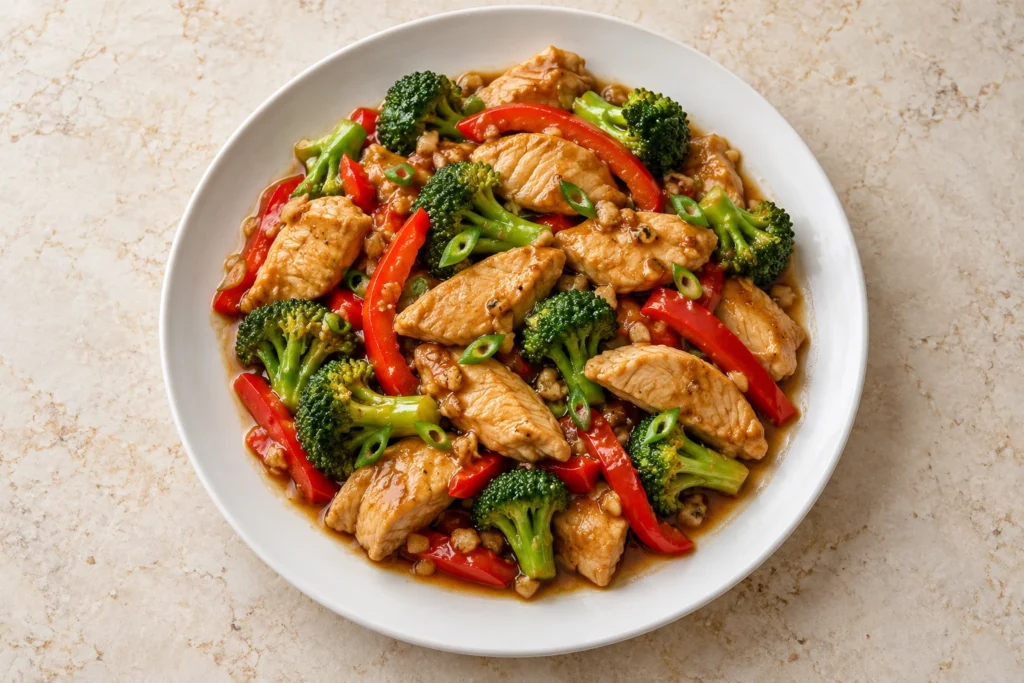
Table of Contents
Why You’ll Love This Chicken with Garlic Sauce
When you need another way to cook chicken, this recipe gives you several useful options:
- Adjustable heat: Keep the sauce mild or add chili flakes.
- Flexible ingredients: Use chicken breasts or thighs and vegetables you enjoy.
- Straightforward preparation: Mix the sauce, prepare your ingredients, then cook in stages.
- A complete dinner with rice: You get chicken and vegetables together, with enough sauce to bring everything together.
Garlic leads the flavor, while ginger adds warmth and rice vinegar balances the sweetness. Because you control the seasoning, you can make small adjustments before serving.
What Is Chinese-Inspired Chicken with Garlic Sauce?
This version combines thinly sliced chicken and vegetables with a broth-and-soy-based sauce. Garlic, ginger, vinegar, and sugar give the sauce its savory, gently tangy character.
The name covers different dishes, so it helps to know what you’re making. Here, your chicken is stir-fried and coated in a glossy sauce thickened with cornstarch. It differs from creamy garlic chicken, which typically uses dairy, and grilled chicken served with a separate garlic sauce.
What Does Garlic Sauce Taste Like?
You should taste garlic first, followed by savory soy sauce, a little sweetness, and a light acidic finish. Optional chili flakes add heat without needing to dominate the dish.
Reduced-sodium broth and soy sauce give you more control over saltiness. You can always add seasoning, but correcting an overly salty sauce takes more work.
Ingredients for Chicken with Garlic Sauce
Prepare everything before you heat the skillet. Once cooking begins, you’ll need the ingredients within reach.
The proposed quantities below make approximately four servings, excluding rice.
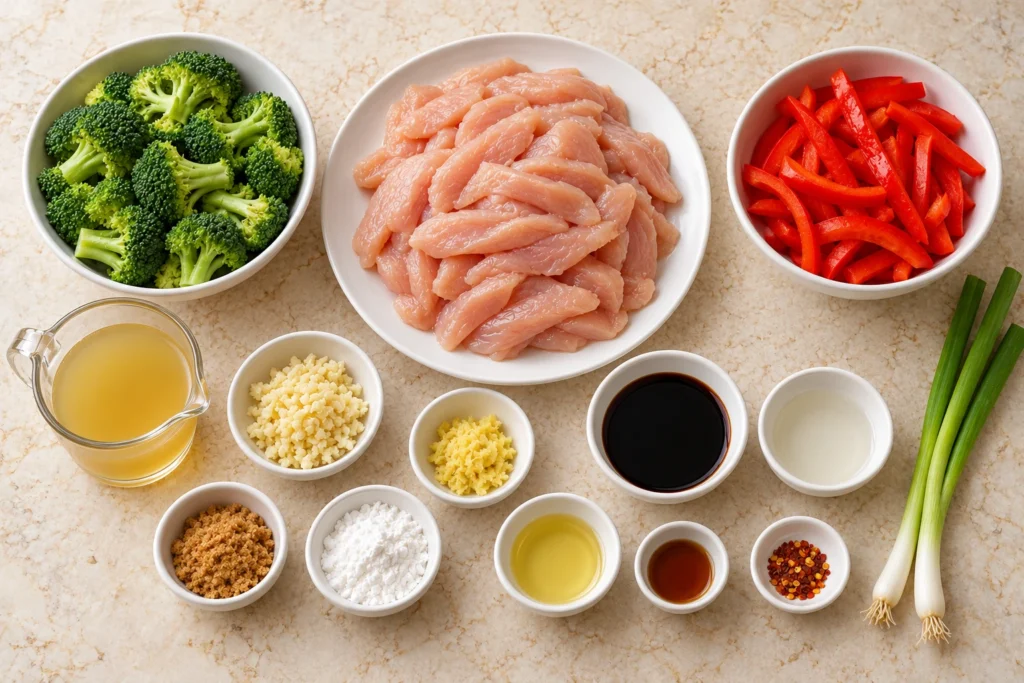
Chicken and Vegetable Ingredients
| Ingredient | Amount | Preparation |
|---|---|---|
| Boneless, skinless chicken breasts | 1½ pounds / 680 g | Slice across the grain, about ¼ inch thick |
| Reduced-sodium soy sauce | 1 tablespoon | For coating the chicken |
| Cornstarch | 2 teaspoons | For coating the chicken |
| Neutral cooking oil | 2 tablespoons, divided | Canola, sunflower, or another suitable cooking oil |
| Broccoli florets | 2 cups | Cut into small, similar-sized pieces |
| Red bell pepper | 1 medium | Slice into thin strips |
| Water | 2 tablespoons | For steaming the broccoli briefly |
| Green onions | 2 | Slice for an optional garnish |
Garlic Sauce Ingredients
| Ingredient | Amount | Purpose |
|---|---|---|
| Fresh garlic | 2 tablespoons minced, approximately 6 cloves | Main aromatic |
| Fresh ginger | 2 teaspoons grated | Adds warmth |
| Reduced-sodium chicken broth | ½ cup / 120 ml | Sauce base |
| Reduced-sodium soy sauce | 3 tablespoons | Savory seasoning |
| Unseasoned rice vinegar | 1 tablespoon | Adds acidity |
| Brown sugar | 1 tablespoon | Balances the sauce |
| Chili flakes | ¼ teaspoon, optional | Adds heat |
| Toasted sesame oil | 1 teaspoon, optional | Finishing flavor |
| Cornstarch | 2 teaspoons | Thickens the sauce |
| Cold water | 1 tablespoon | Makes the cornstarch slurry |
Ingredient Substitutions
You can replace the chicken breasts with the same weight of boneless, skinless thighs. Trim excess fat and slice them evenly; cooking time may differ.
Snap peas or thinly sliced carrots can replace some of the vegetables. Mushrooms also work as a possible variation, although they release moisture and may need additional cooking before you add the sauce.
For a gluten-free adaptation, use suitable gluten-free tamari and check the broth and every packaged ingredient. Standard soy sauce commonly contains wheat. These substitutions have not been tested with this formulation.
How to Make Chicken with Garlic Sauce
You’ll need a large skillet or wok, a cutting board, small mixing bowls, and a food thermometer.
Step 1: Prepare the Chicken
Pat the chicken dry with paper towels, then slice it into strips. Toss it with 1 tablespoon reduced-sodium soy sauce and 2 teaspoons cornstarch.
Set it aside briefly while you prepare the remaining ingredients. Keep raw chicken and its utensils separate from vegetables, garnishes, and cooked food.
How to Slice Chicken for Even Cooking
Look for the direction of the muscle fibers, then cut across them. Aim for pieces approximately ¼ inch thick.
Consistent thickness matters more than making every strip identical in length. Thick pieces need longer to cook, which can leave thinner pieces dry.
Step 2: Mix the Sauce
In a bowl, combine:
- Chicken broth
- The remaining 3 tablespoons soy sauce
- Rice vinegar
- Brown sugar
- Optional chili flakes
In another small bowl, stir 2 teaspoons cornstarch with 1 tablespoon cold water.
Keep the garlic, ginger, and optional sesame oil separate.
How to Keep Your Slurry Smooth
Stir the cornstarch into cold water until no dry pockets remain. Give it another stir immediately before pouring it into the pan, because the starch settles as it stands.
Avoid sprinkling dry cornstarch directly into hot sauce, where it can form lumps.
Step 3: Cook the Chicken in Batches
Heat 1 tablespoon oil in a large skillet over medium-high heat. Add half the chicken in a single layer.
Allow it to cook briefly before turning, then stir-fry until lightly browned and cooked through. Thin pieces may take roughly 3–5 minutes per batch, but use temperature rather than time alone to judge doneness.
Transfer to a clean plate and repeat with the remaining chicken, using ½ tablespoon oil.
Chicken should reach 165°F (74°C). To check a thin strip, insert the thermometer from the side into its thickest part. www.foodsafety.gov
Step 4: Cook the Vegetables and Aromatics
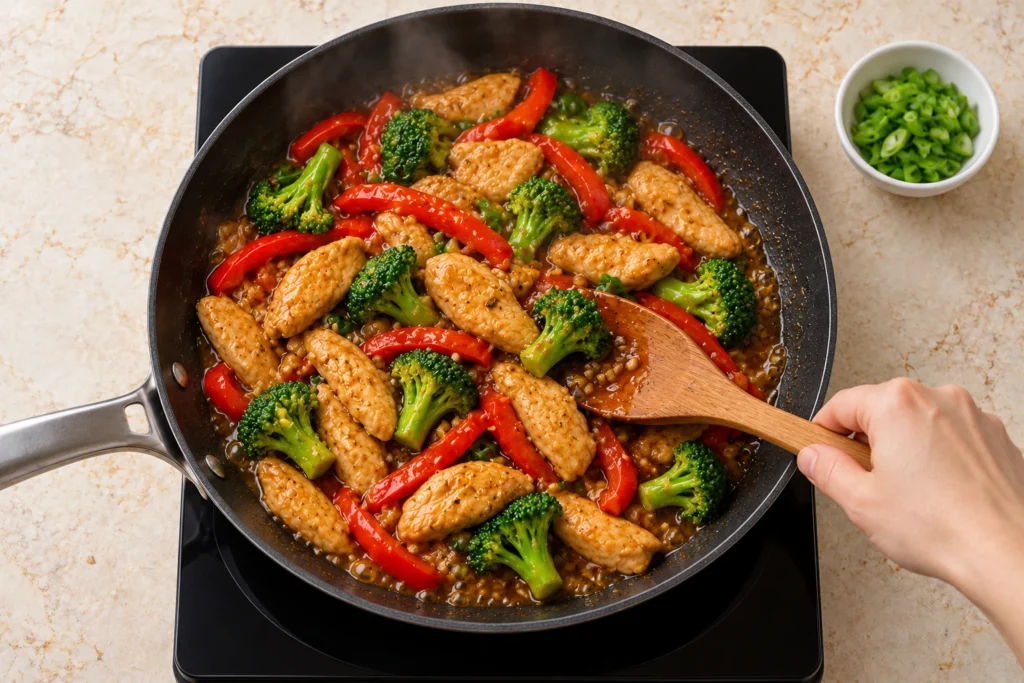
Add the remaining ½ tablespoon oil to the skillet. Stir-fry the broccoli and bell pepper for about 2 minutes.
Add 2 tablespoons water, cover briefly, and let the broccoli steam for 1–2 minutes. Uncover and allow excess water to evaporate.
Reduce the heat to medium. Add the garlic and ginger, stirring for approximately 20–30 seconds, just until fragrant. If the pan looks dry or the garlic begins browning quickly, add a small splash of the prepared sauce.
Step 5: Thicken the Sauce and Combine
Pour the broth mixture into the skillet and bring it to a gentle simmer.
Stir the slurry again, then pour in about half while stirring the sauce. Let it simmer briefly before deciding whether you need the remainder.
Return the chicken and its collected juices to the skillet. Toss until everything is hot and lightly coated. Add the optional sesame oil.
If the sauce becomes too thick, stir in water or broth, one tablespoon at a time. Scatter green onions over the top and serve.
Tips for Tender Chicken and Balanced Garlic Sauce
Give the Chicken Enough Space
An overcrowded skillet traps moisture and makes browning difficult. Cook in batches, even if that adds a few minutes.
You’ll also find it easier to turn the chicken and check individual pieces when the pan isn’t packed.
Watch the Garlic Closely
Finely minced garlic can scorch quickly in a hot skillet. Add it after the vegetables, reduce the heat, and have the sauce ready.
If the garlic turns very dark and smells bitter, remove the burnt ingredients before continuing. Adding sugar won’t remove that burnt flavor.
Adjust the Sauce Gradually
Taste the finished sauce with a piece of chicken or a little rice. A sauce that tastes strong by itself may be balanced when served with the rest of the meal.
| Problem | What you can do |
|---|---|
| Sauce is too thick | Stir in water or unsalted broth a tablespoon at a time |
| Sauce is too thin | Simmer briefly, then add a little more prepared slurry if needed |
| Sauce is too salty | Dilute with unsalted liquid; avoid further reduction |
| Sauce tastes too sweet | Add a small splash of rice vinegar and taste again |
| Garlic tastes burnt | Replace scorched aromatics rather than trying to cover the bitterness |
Easy Chicken with Garlic Sauce Variations
Make a Mild Version
Leave out the chili flakes. Your sauce will still have plenty of flavor from the garlic, ginger, and soy sauce.
If you’re cooking for people with different preferences, offer chili flakes separately at the table.
Add More Heat
Start with the suggested chili amount, then taste before increasing it. Chili products vary in strength, so small additions are easier to control.
Change the Vegetables
Try replacing part of the broccoli with snap peas or sliced mushrooms. Add firm vegetables earlier and delicate vegetables later.
Keep the overall vegetable quantity similar on your first attempt. Adding considerably more vegetables can crowd the skillet and leave you with too little sauce.
What to Serve with Chicken with Garlic Sauce
Steamed rice is an easy choice because it catches the sauce without competing with the garlic.
You can also serve your chicken with:
- Brown rice for a firmer, chewier texture.
- Cooked noodles served alongside the stir-fry.
- Cauliflower rice as a vegetable-based accompaniment.
- A cucumber salad for a cool, crisp contrast.
If you plan to toss noodles directly into the skillet, you may need additional sauce. Otherwise, they can absorb much of the liquid intended to coat the chicken.
How to Store and Reheat Chicken with Garlic Sauce
Refrigerating Leftovers
Divide leftovers into shallow containers and refrigerate promptly. Keep your refrigerator at 40°F (4°C) or below, and use cooked chicken leftovers within 3–4 days. www.foodsafety.gov
Store rice separately so you can reheat each component as needed.
Freezing Garlic Chicken
You can freeze portions in suitable airtight containers, although the vegetables may soften and the sauce may change consistency after thawing.
FoodSafety.gov lists 2–6 months as a general freezer-quality range for cooked meat or poultry leftovers. This particular recipe’s freezing quality has not been tested. Food kept continuously frozen at 0°F (-18°C) remains safe indefinitely; those storage ranges concern quality. www.foodsafety.gov
Reheating Without Drying Out the Chicken
Warm a portion in a skillet over moderate heat with a splash of water. Stir gently and cover briefly if needed to help it heat evenly.
For the microwave, use a microwave-safe dish, cover loosely, and stir between short heating intervals. Reheated leftovers should reach 165°F (74°C). www.foodsafety.gov
Chicken with Garlic Sauce Recipe Card
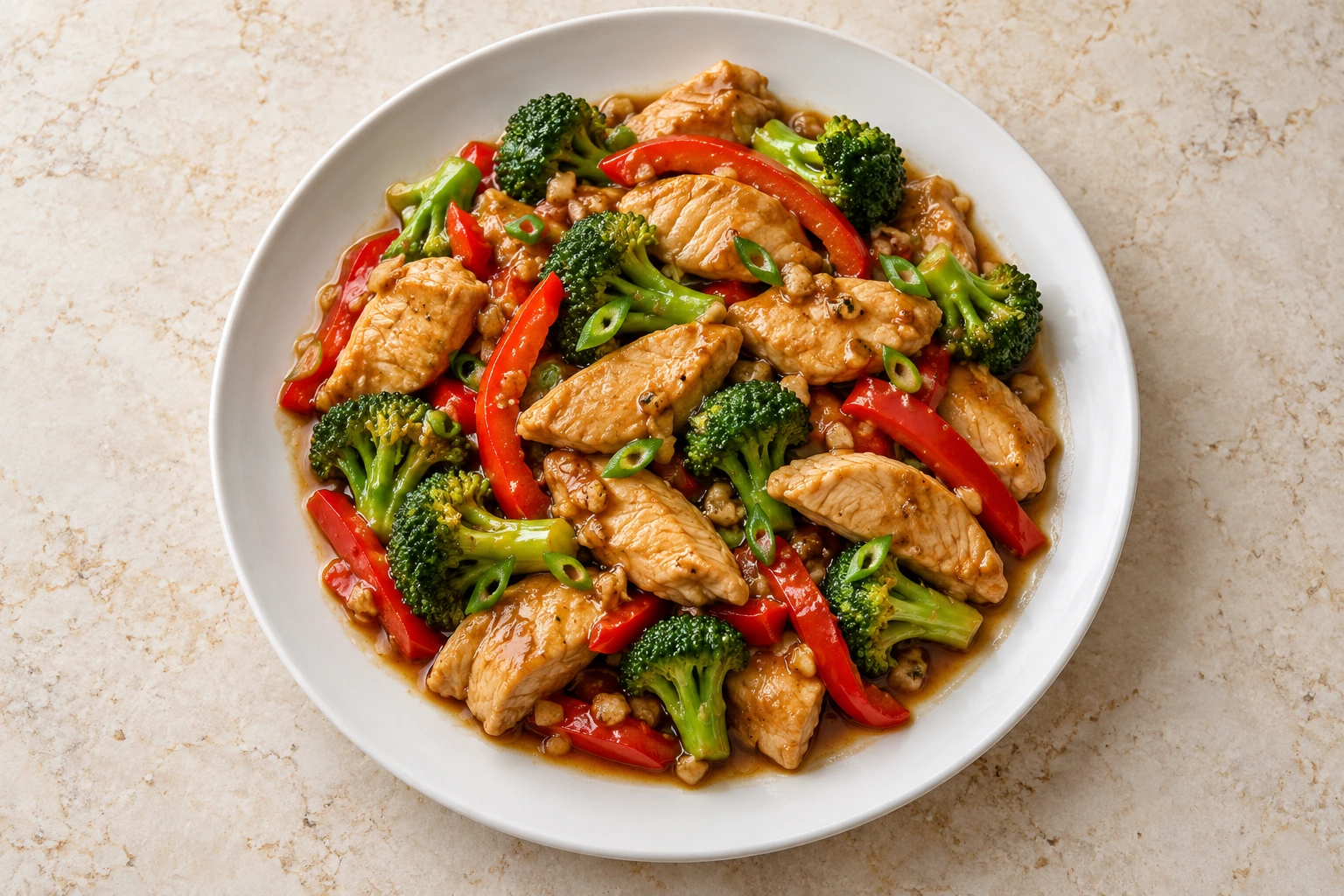
Chicken With Garlic Sauce
Ingredients
Equipment
Method
- Prepare the chicken.Pat the chicken dry, then slice it across the grain into strips about ¼ inch thick. Toss with 1 tablespoon reduced-sodium soy sauce and 2 teaspoons cornstarch. Keep separate from the vegetables and garnishes.
- Prepare the vegetables.Cut the broccoli into small, evenly sized florets and slice the bell pepper into thin strips. Mince the garlic, grate the ginger, and slice the green onions. Set aside separately.
- Mix the garlic sauce.In a small bowl, whisk together the chicken broth, remaining 3 tablespoons soy sauce, rice vinegar, brown sugar, and optional chili flakes. Keep the garlic, ginger, and sesame oil separate.
- Make the cornstarch slurry.In another small bowl, stir together 2 teaspoons cornstarch and 1 tablespoon cold water until smooth. Stir again just before using.
- Cook the chicken in batches.Heat 1 tablespoon oil in a large skillet over medium-high heat. Add half the chicken in a single layer and cook, turning occasionally, until lightly browned and cooked through, approximately 3–5 minutes. Check that the thickest pieces reach 165°F (74°C). Transfer to a clean plate. Repeat with the remaining chicken and ½ tablespoon oil.
- Cook the vegetables.Add the remaining ½ tablespoon oil to the skillet. Add the broccoli and bell pepper and stir-fry for about 2 minutes. Add 2 tablespoons water, cover, and steam for 1–2 minutes. Uncover and allow any excess water to evaporate.
- Add the garlic and ginger.Reduce the heat to medium. Add the garlic and ginger and stir for 20–30 seconds, just until fragrant. If they begin browning quickly, immediately add a splash of the prepared sauce.
- Thicken the sauce.Pour the sauce mixture into the skillet and bring to a gentle simmer. Stir the cornstarch slurry again, then gradually add about half while stirring. Simmer briefly until the sauce begins to thicken, adding more slurry only if needed.
- Combine and finish.Return the chicken and its collected juices to the skillet. Toss gently until heated through and coated in sauce. Stir in the optional sesame oil. If the sauce is too thick, add water or broth, 1 tablespoon at a time.
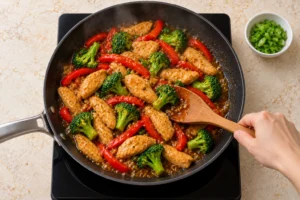
- Garnish and serve.Sprinkle with sliced green onions, if using, and serve with rice or your preferred accompaniment.
FAQs About Chicken with Garlic Sauce
What Is Chicken with Garlic Sauce Made Of?
This version contains sliced chicken, broccoli, bell pepper, and a sauce made with garlic, ginger, broth, soy sauce, rice vinegar, and brown sugar. Cornstarch thickens the sauce, while chili flakes provide optional heat.
Is Chicken with Garlic Sauce Spicy?
It can be, but you control the heat. Leave out the chili flakes for a mild version or add them gradually for a spicier dish.
Can You Use Chicken Thighs Instead of Breasts?
Yes. Use boneless, skinless thighs, trim them, and cut them into evenly sized strips. Their cooking time may differ, so check that they reach 165°F (74°C).
How Do You Thicken Chicken with Garlic Sauce?
Use cornstarch mixed with cold water. Stir the slurry before adding it to the simmering sauce, then allow it to heat before adding more. Start gradually to avoid making the sauce overly thick.
Can You Make Chicken with Garlic Sauce Ahead of Time?
You can prepare the sauce base and chop the vegetables ahead, keeping them refrigerated separately. For the best contrast between tender chicken and crisp vegetables, cook shortly before serving. Follow the storage guidance above if reheating a completed batch.
Make Dinner Something to Look Forward To
Chicken with garlic sauce gives you a practical way to turn familiar ingredients into a satisfying dinner. Preparing everything first, cooking the chicken in batches, and watching the garlic carefully will help you manage each stage with confidence.
Serve it over rice, adjust the heat to your preference, and choose vegetables you enjoy.
Tried this chicken with garlic sauce? Leave a recipe rating and tell us which vegetables you used—or share the adjustment that made it right for your table.